7 Best Practices for Managing Accounts Receivable and Payable
Understanding Your Cash Flow: Practical Steps to Manage Your Business and Drive Growth
Key Takeaways
- Late payments cost New Zealand small businesses over $800 million annually, making tight accounts receivable processes essential.
- Cash flow issues cause the vast majority of small business failures, often despite the company showing a profit on paper.
- Automating invoices and updating payment terms can save hours of administrative work every week.
- Negotiating extended supplier terms and managing inventory levels provides immediate relief to your cash balance.
- Strategic external financing helps bridge timing gaps and supports long-term business expansion.
Healthy cash flow builds on the day to day discipline of how money comes into and goes out of your business. For New Zealand SMEs, the current economic climate brings a specific set of challenges. Late paying customers, rising operational costs, and tighter credit conditions mean that sloppy accounts receivable and payable processes quickly turn into real cash stress. We often see this manifest as delayed wages, missed tax payments, awkward calls from suppliers, and stalled growth plans. In our experience, most cash flow pressure relates to timing and systems rather than a lack of profit on paper.
The scale of this issue is significant. According to Xero’s Small Business Insights, the cost of late payments to Kiwi small businesses jumped 81% in just two years. This figure rose from an estimated $456 million in 2021 to $827 million in 2023. When that much capital is locked up, it restricts your ability to grow and makes every unexpected expense feel like a crisis. We view strong accounts receivable (AR) and accounts payable (AP) management as a practical, controllable lever that owners can pull to steady the ship before reaching a breaking point.
What is the difference between cash flow and profit?
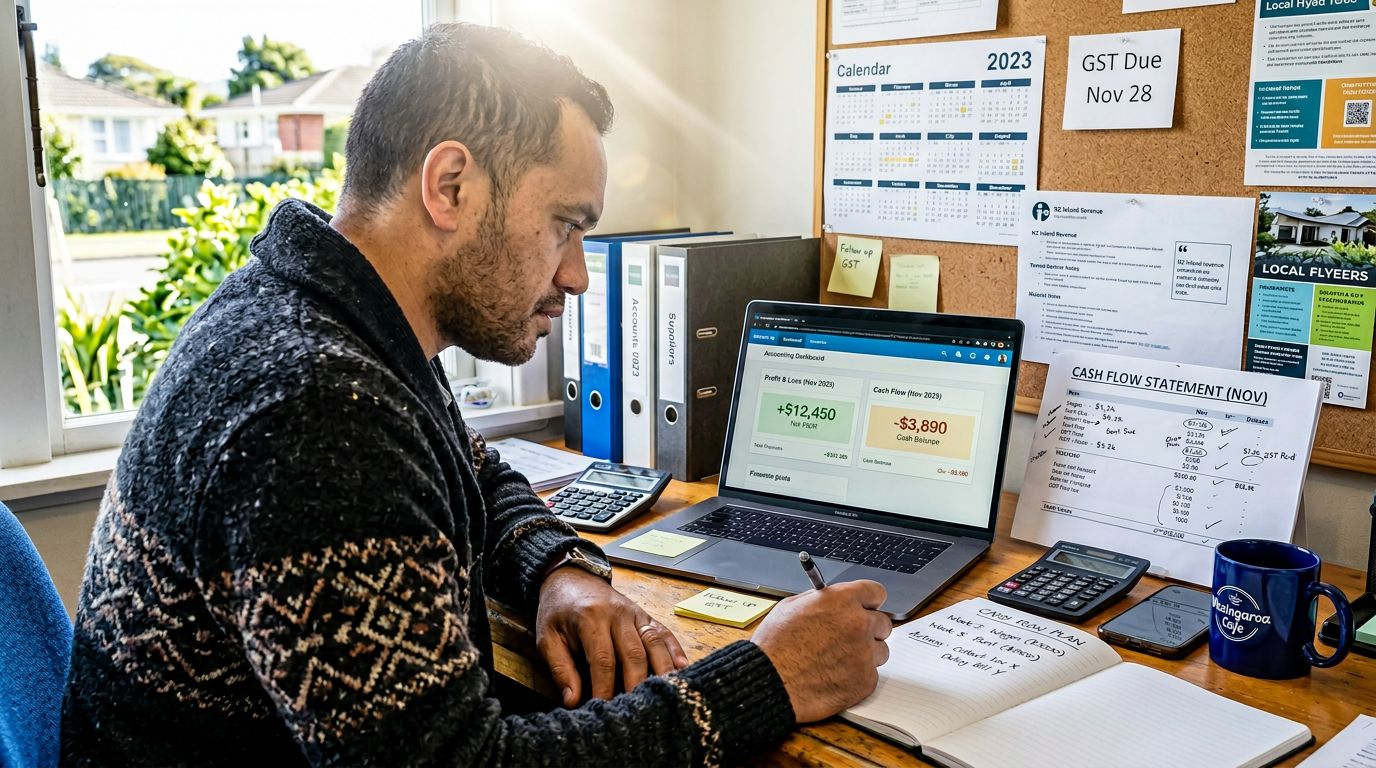
Cash flow refers to the actual movement of money in and out of your business bank account, while profit is the surplus remaining after all expenses are deducted from total revenue on a financial statement. You can have a very profitable month on your profit and loss statement but still have a negative cash flow if your customers haven't actually paid their invoices yet. This distinction is vital for small business owners to understand because you cannot pay your staff or your landlord with "profit on paper." You need actual cash on hand to meet your obligations.
A study cited by Bizcap notes that 82% of small businesses that fail do so because of cash flow issues, not a bucket of profitability. This highlights why mastering your cash flow statement and maintaining a regular cash flow forecast matters more than just chasing the next sale. We've seen many businesses with full order books go under because they couldn't manage the flow of money during a growth spurt. Managing your business effectively requires a constant eye on your liquidity, ensuring you have enough cash to cover operating expenses and unexpected shortfalls.
How do late payments impact your financial health?
Late payments act as an interest free loan you are unknowingly providing to your customers, which drains your working capital and adds unnecessary stress to your daily operations. The GoCardless 2025 Pursuing Payments report found that 62% of New Zealand SMBs say they are losing money to late payments, with some reporting losses of over $10,000 per month. Beyond the direct financial loss, there is a massive time cost involved. The same report indicates that 29% of NZ businesses spend around an hour each week chasing overdue invoices. That is time you could spend on strategy, sales, or improving your service.
When money stops flowing into your business on time, your net cash flow drops, forcing you to rely on an overdraft or personal funds to keep things moving. We recommend moving away from the mindset that late payments are an inevitable cost of doing business. By tightening your systems and using tech like e-invoicing and automated reminders, you can reduce the time spent on manual follow ups and improve your cash balance. Prompt invoicing is the first step in ensuring your accounts receivable remains healthy.
What are the best practices for managing accounts receivable?
Effective accounts receivable management starts with clear communication and consistent follow up to ensure your customers respect your payment terms. We suggest reviewing your current terms and considering updates that require upfront payment or shorter windows for new clients. In a tough economic climate, your accounts receivable is essential to your cash flow. We've seen that businesses that actively follow up overdue invoices, especially those over 90 days, maintain much better liquidity than those that wait for the customer to remember.
Using a modern spreadsheet or accounting software to monitor your cash flow allows you to see exactly who owes you money and for how long. Automation is a powerful tool here. Setting up automatic reminders ensures that a friendly prompt hits a customer's inbox the day an invoice becomes overdue. This removes the "awkwardness" of the conversation and keeps your business top of mind. If you find that a significant portion of your total cash is tied up in unpaid bills, it might be time to look at your credit control processes or consider whether your current client base aligns with your need for steady cash inflow.
How can you optimise your accounts payable?
Optimising accounts payable involves strategically timing your outgoings to keep as much cash in your business for as long as possible without damaging supplier relationships. Managing accounts payable is just as important as chasing down receivables. We recommend negotiating with your suppliers for better terms, perhaps asking for an extra 30 days to pay where possible. Most suppliers would rather have a reliable partner who pays slightly later than a customer who disappears entirely.
Timing your payments to align with your own cash inflows can prevent a temporary shortfall. For example, if most of your customers pay on the 20th of the month, scheduling your major supplier payments for the 22nd ensures the money is actually there before it leaves. We also suggest keeping a close eye on your operating expenses and trimming any unnecessary costs. Small, recurring subscriptions or overstocked inventory can slowly bleed your cash balance. Whether you run a cafe in Christchurch or a law firm in Lower Hutt, keeping your outgoings lean is a universal rule for a healthy cash flow.
Is your tax house in order for 2025?
Inland Revenue is currently intensifying its enforcement efforts, making it more important than ever to separate your GST and PAYE from your operating cash flow. With national tax debt sitting at billions of dollars, the IRD has increased its compliance and debt recovery budget. We've observed that businesses that treat tax obligations as part of their general spending pool often find themselves in trouble when it comes time to pay the bill. We advocate for using separate accounts or tax pooling tools to ensure that the money you owe the government is never confused with the money you have available to grow your business.
If you find yourself struggling to meet these obligations, proactivity is your best friend. Communicating with the IRD before a deadline passes is always better than waiting for an audit. We can help you understand what Inland Revenue’s tougher stance means for your cash flow and how to stay ahead of these pressures. Refinancing or restructuring your existing debt can often provide the breathing room needed to satisfy tax requirements while keeping your operations running smoothly.

When should you consider external business finance?
External finance is a strategic tool used to bridge timing gaps between income and expenses or to fund expansion when your internal cash flow is tied up in growth activities. Taking out a loan is a standard part of managing a business, provided it is done with a clear plan for repayment. We often see businesses reach a plateau because they are trying to fund everything from their daily cash balance. This can lead to "cash shortages" that prevent you from taking on new employees or investing in new equipment.
There are various options available, from working capital finance and term loans to debtor finance and equity access. These solutions are designed to help you manage day to day operations without straining your resources. If you identify a structural shortfall or a specific opportunity that requires more capital than you currently have on hand, we can help you restructure your debt into realistic repayment plans and secure working capital finance. This approach moves you from a state of survival into a position where you can confidently plan for long term growth.
How can BEFA help you manage your cash flow?
We act as your advocate, helping you navigate the complexities of business finance and putting systems in place that protect your company’s financial health. We understand that every New Zealand business is unique, which is why we offer tailored solutions rather than a one size fits all approach. Whether you need to bridge a gap caused by late payments or you are looking to invest in the future of your firm, we provide the expertise and the connections to secure the right funding.
Our team specialises in helping owners move from "surviving" to thriving by addressing the root causes of cash flow stress. If you are ready to finance your next business move with commercial loans tailored to New Zealand businesses, we are here to walk alongside you. We can assist with everything from asset finance to complex debt restructuring, ensuring your business has enough cash to meet its needs today and its goals for tomorrow. Contact us at 021 720 665 or email bill@befa.co.nz to start the conversation.
_Disclaimer: This article provides general information and does not constitute formal financial or legal advice. Business owners should consult with a qualified professional regarding their specific financial situation and any potential borrowing or restructuring decisions._